Launching a frozen food product often starts with a strong concept — sometimes even a finished recipe. But recipes that work in a test kitchen don’t always translate directly to manufacturing.
Once production scales up, differences in equipment, ingredient behavior, and batch consistency can quickly change how a product forms, fries, and freezes. In private label food manufacturing, those factors determine whether a product can be produced reliably or requires further refinement.
Understanding how private label food manufacturing works — from formulation and production trials to packaging and distribution — helps brands bring products to market more efficiently.
Understanding the Role of Private Label Food Manufacturing
Private label food manufacturing allows brands to bring products to market without building their own production facilities. Instead, they partner with a manufacturer that already has the equipment, quality systems, and operational expertise required to produce food at scale.
For many companies, this model removes the need for major capital investment while providing access to experienced production teams and established food safety programs. But the success of that partnership depends on something many brands don’t initially consider: whether the product concept actually fits the manufacturer’s capabilities.
Manufacturing facilities are designed around specific processes, equipment, and product categories. When a product aligns with that environment, development moves much more smoothly. When it doesn’t, brands often encounter delays as the product is reworked to fit the manufacturing process.
Understanding that alignment early is one of the most important steps in private label food manufacturing.
Starting With the Product Concept
Most private label projects begin in one of two ways: either with a concept or with a recipe in hand. Both approaches are common, but the manufacturing process can look very different depending on the starting point.
When a recipe is provided, the first step is evaluating whether that formulation can run successfully on production equipment. Even well-developed recipes often need adjustments before they perform consistently in a manufacturing environment.
When brands come with only a concept, an R&D team typically works with them to develop a formulation that meets their goals while remaining compatible with the production process.
In either case, the key question isn’t simply whether the product tastes good. The real test is whether it can be produced reliably at scale.
If a formulation can’t run consistently on the equipment, it will eventually slow production or create quality issues. Identifying those challenges early helps prevent larger problems later in the development process.
Why Manufacturing Fit Matters
One of the most important — and often overlooked — aspects of private label food manufacturing is ensuring the product fits the manufacturer’s operational capabilities.
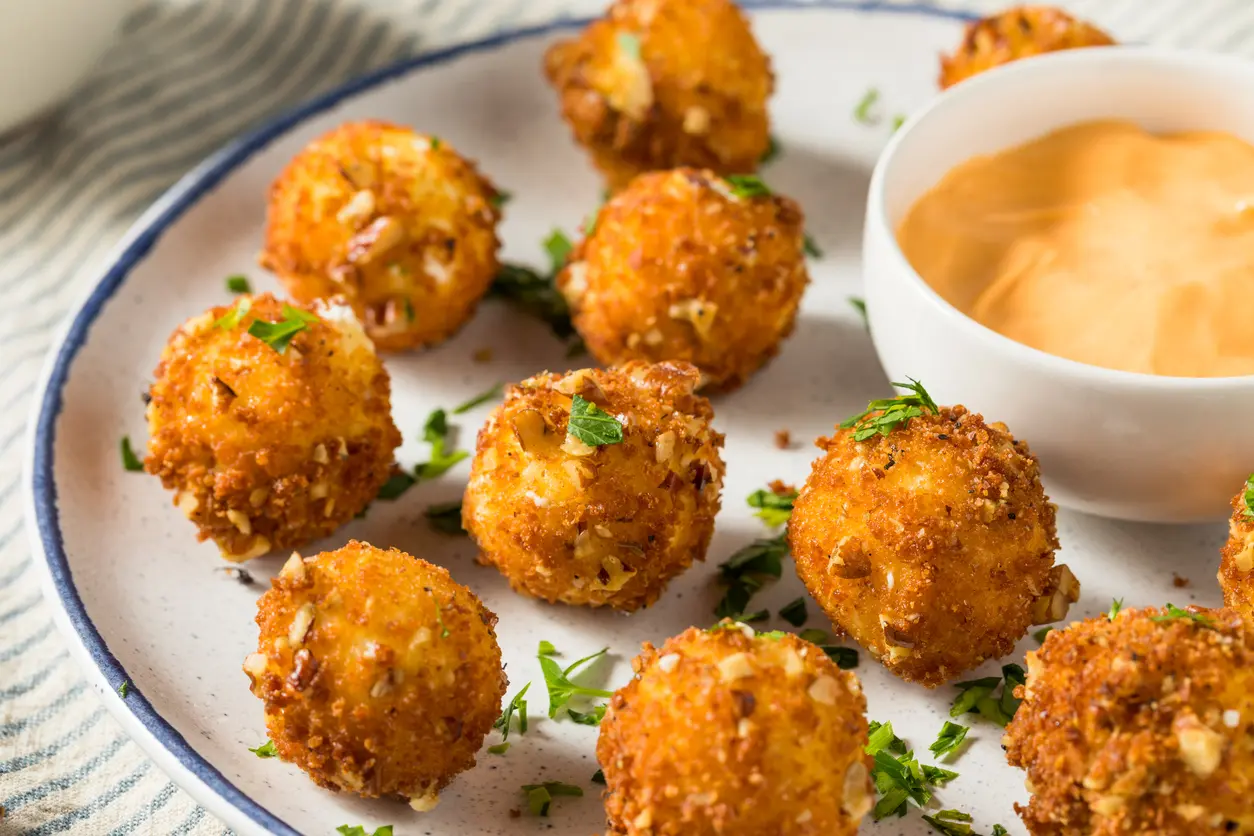
Every facility is built around certain production methods. Equipment, workflow, and quality systems are all designed with specific product categories in mind. At Ascot Valley Foods, our operation is designed around formed, fried, frozen foods such as nuggets, bites, falafel, and similar appetizer-style products.
Because our production process is optimized for those products, certain items fall outside our scope. Think baked goods, uncooked meats, or products containing certain allergens such as nuts or shellfish.
These limitations are not unusual in food manufacturing. In fact, they are part of what allows facilities to maintain consistent quality and food safety standards. It’s important for brands to choose a manufacturer whose capabilities match the product they want to create. When they do, development tends to move faster and more efficiently.
Product Development and R&D in Private Label Food Manufacturing
Once a product concept is confirmed to fit a manufacturer’s facility and equipment, the next step is product development.
This is where a concept or recipe begins the transition from idea to manufacturable product. During this stage, an R&D team works directly with the brand to refine the formulation so it performs consistently during production. Even when a company arrives with a finished recipe, adjustments are common, which is why R&D remains an essential part of the process.
Adapting Recipes for Manufacturing
One of the biggest challenges in private label food manufacturing is translating a small-batch recipe into a product that can run consistently on production equipment.
In a test kitchen, ingredients are mixed in small volumes and handled carefully. In a manufacturing environment, those same ingredients must move through mixers, forming equipment, fryers, and freezing systems while maintaining consistent texture and flavor.
Small changes in formulation can have a significant impact on how a product behaves during this process. The role of the manufacturer during development is to ensure the recipe works not only from a culinary perspective, but also from an operational one.
Factors That Affect Manufacturing Performance
Several technical factors influence whether a product will perform consistently in production, including:
- Ingredient ratios
- Mix consistency
- Grind size
- Moisture levels
- Processing conditions
Even minor differences in these variables can affect how a product forms, fries, and freezes.
The goal during the R&D phase isn’t to change the identity of the product. Instead, the focus is on refining the formulation so it can be produced reliably while still delivering the flavor, texture, and appearance the brand expects.
When development and manufacturing teams collaborate closely during this stage, the product is far more likely to succeed once it moves into full production.
Production Trials and Real-World Testing
Once the formulation is ready, the next step is a production floor trial.
This is where the product moves from development into a real manufacturing environment. Instead of small test batches, the product is produced using the same equipment and processes that will be used during full production.
At Ascot, production trials often involve running a large batch — sometimes close to 1,000 pounds — so we can observe how the product behaves under actual production conditions. Customers are often onsite during these trials to see the process firsthand and evaluate the results.
A production trial helps confirm how the product performs as it moves through the full manufacturing process.
Moving from Test Kitchen to Production Equipment
Production equipment introduces variables that don’t always appear in small-batch development. Larger mixing volumes can introduce more air into the product. Ingredient distribution can shift slightly, and forming equipment may handle mixtures differently than small-scale preparation methods.
These differences are normal, but they can influence how a product behaves as it moves through forming, frying, and freezing stages.
Running a production trial allows us to evaluate these factors before the product enters full-scale manufacturing.
What Production Trials Reveal
Production trials help confirm whether the product performs consistently across several key areas, including:
- Whether the product forms correctly on the equipment
- How it behaves during frying
- Whether flavor and texture remain consistent at scale
- How the product performs during freezing and packaging
Sometimes a trial confirms that the formulation is already very close to final. In other cases, it reveals small adjustments that need to be made before moving forward. Those adjustments may include refining seasoning levels, modifying fry time, or adjusting mix consistency.
These insights are a normal and valuable part of the development process. Identifying them early helps ensure the product can be produced consistently once full manufacturing begins.
Iteration Is a Normal Part of Development
Production trials often reveal small adjustments that need to be made before a product is ready for full-scale manufacturing. As a result, product development rarely happens in a single step. In fact, most private label products go through several iterations before they reach their final version.
When brands arrive with well-developed recipes, the process may only require three or four adjustments. When a completely new product is being created, the process may involve more experimentation — sometimes up to 10 iterations.
In many cases, the adjustments are relatively small but significant. They might include:
- Modifying seasoning levels
- Adjusting fry time
- Refining ingredient ratios
- Improving mix consistency
These changes often have a meaningful impact on how the product performs during production.
For brands that have spent significant time developing their recipes, these adjustments can feel difficult at first. But they are a normal part of adapting a product for large-scale manufacturing.
Cost Considerations in Private Label Food Manufacturing
Cost is another important factor during product development. Many brands approach manufacturers with a target price already in mind. In reality, those targets often shift as the formulation evolves.
Several factors influence production cost, including ingredient selection, processing complexity, and packaging. Products with specialty labels — such as vegan, gluten-free, or non-GMO — may require specific ingredients or handling procedures, which can increase production costs.
Automation also plays a role. Processes that require more manual labor typically increase production costs compared with highly automated operations.
Throughout development, Ascot works closely with brands to ensure the final product balances product specifications with realistic production economics.
Communication Is Key to Successful Partnerships
Across nearly every successful private label project, one factor consistently stands out: communication.
During development, manufacturers rely on clear information from the brand. Understanding those expectations helps guide decisions throughout the process. Important details often include:
- Flavor expectations
- Texture targets
- Cost goals
- Packaging format
- Intended market
When this information is shared early, R&D and production teams can move much more efficiently.
The most successful projects are almost always collaborative. When both sides approach development as a partnership, challenges can be solved quickly and products move to market more smoothly.
Bringing the Product to Market
Once the formulation, production process, and packaging are finalized, the product is ready to move into full production.
From there, brands typically distribute their products through one or more channels.
Some products are designed for retail grocery stores, where packaging, labeling, and shelf presentation are important. Others are developed for food service distribution, where packaging is often simpler and products move through distribution channels more quickly.
Club stores and large-format retailers may have their own requirements as well.
Understanding the intended distribution channel early in development helps guide decisions about packaging, production scale, and product specifications.
Move from Product Idea to Scalable Manufacturing With Ascot
Bringing a frozen product to market through private label food manufacturing involves much more than producing a recipe. Products must be designed to run consistently in real manufacturing environments while meeting expectations for quality, cost, and performance.
At Ascot Valley Foods, we work with partners throughout the development process to make that transition possible.
Our team supports brands at multiple stages, including:
- Recipe development and refinement to ensure formulations perform reliably during production
- Production trials and testing to validate how products form, fry, and freeze at scale
- Flexible manufacturing for formed, fried, frozen foods such as nuggets, bites, falafel, and appetizers
- Packaging options for retail, club store, and food service distribution
Because our R&D and manufacturing teams work directly with customers, we’re able to move efficiently from concept to production while solving challenges along the way.
For many brands, the biggest challenge isn’t the product idea; it’s translating that idea into something that can run consistently in a manufacturing environment. Having a partner who understands both product development and production realities can make that process much smoother.
If you’re exploring private label food manufacturing for a new or existing product, we’d welcome the opportunity to talk.